
- On December 21, 2025
- In Top attractions Travel guide
Capitoline Museums in Rome: Complete Guide to Visiting the Musei Capitolini (Tickets, Hours & How to Get There)
Are you planning to visit the Capitoline Museums in Rome? Excellent choice, they’re one of the most fascinating cultural sites in the Eternal City… yet many travelers still walk right past them without realizing what they’re missing.
Sitting high on Capitoline Hill, inside the Renaissance palaces redesigned by Michelangelo, the Musei Capitolini are often described as the world’s first public museum. And once you’re inside, it’s easy to see why they’re so iconic.
Here you’ll come face-to-face with masterpieces like the Capitoline Wolf, the equestrian statue of Marcus Aurelius, and the colossal head and hand of Constantine. Add to that an unbeatable panoramic view over the Roman Forum, and you’ve got one of the most rewarding museum visits in Rome.
In this complete guide, you’ll find everything you need to plan your visit to the Capitoline Museums, including:
- the best Capitoline Museums tickets and which one to choose,
- the opening hours and ideal visit duration,
- how to get to the Capitoline Museums,
- the must-see artworks and rooms inside the palaces,
- plus the top places to visit nearby to make the most of your day.
👉 Follow the guide and you’ll quickly see why the Capitoline Museums deserve a spot on every Rome itinerary.
Contents
- 1 The Best Tickets for the Capitoline Museums in Rome
- 2 What to See at the Capitoline Museums? The Must-See Highlights & Artworks
- 3 Ticket Options for the Capitoline Museums in Rome
- 4 Capitoline Museums Opening Hours (and the Best Time to Visit)
- 5 Where Are the Capitoline Museums in Rome?
- 6 How the Capitoline Museums Are Structured (and How to Navigate Them Easily)
- 7 History of the Capitoline Museums
- 8 What to See and Do Near the Capitoline Museums
- 9 FAQ About the Capitoline Museums in Rome
The Best Tickets for the Capitoline Museums in Rome
Looking to book a standard ticket for the Capitoline Museums? Or maybe you’d prefer a skip-the-line ticket or a combo pass that also includes top attractions like the Pantheon, Altar of the Fatherland, or even the Centrale Montemartini, often at a better price?
Whatever your plan, here are the best Capitoline Museums tickets you can book right now to save time, skip the queues, and make your visit as smooth as possible >>
What to See at the Capitoline Museums? The Must-See Highlights & Artworks
Walking into the Capitoline Museums in Rome can feel a bit overwhelming at first and that’s completely normal. You’re stepping into a treasure trove of ancient sculptures, masterpieces of Renaissance painting, monumental fragments, and rooms that have witnessed 2,000 years of Roman history.
Time flies in here… but that’s part of the magic.
 Tip : To help you get the most out of your visit, here are the absolute must-see artworks. If you’re short on time, focus on these highlights, they capture the very essence of the Musei Capitolini.
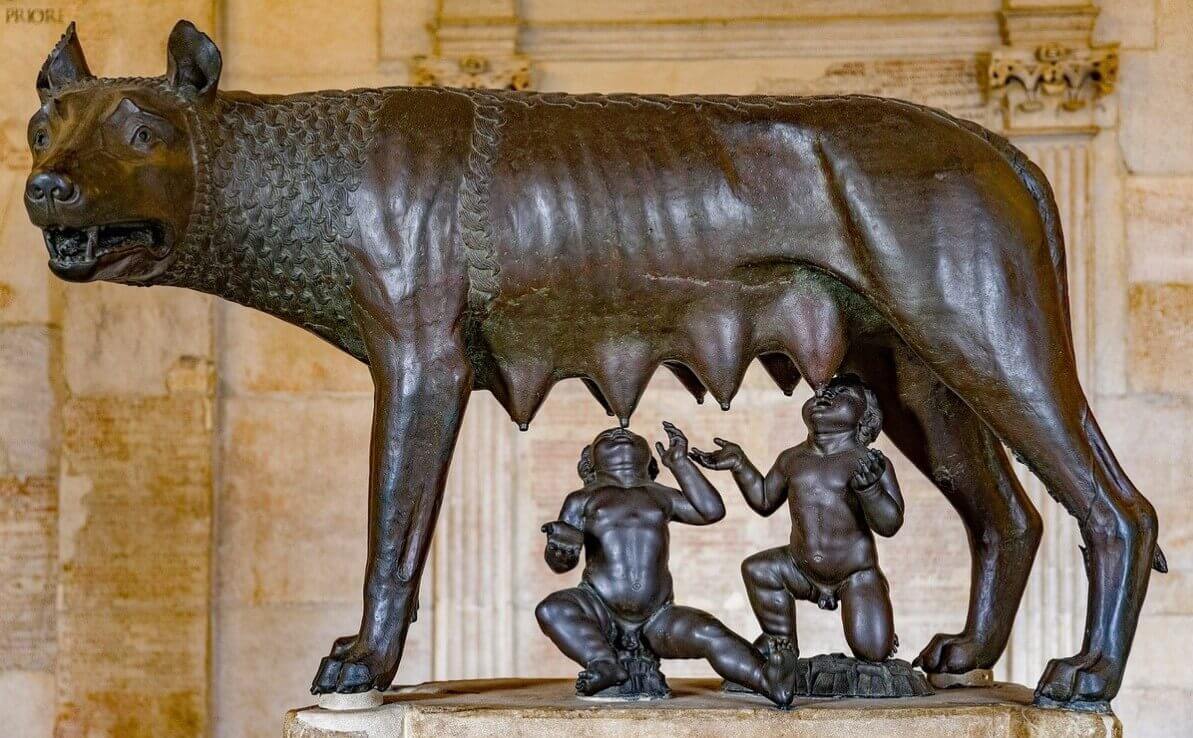
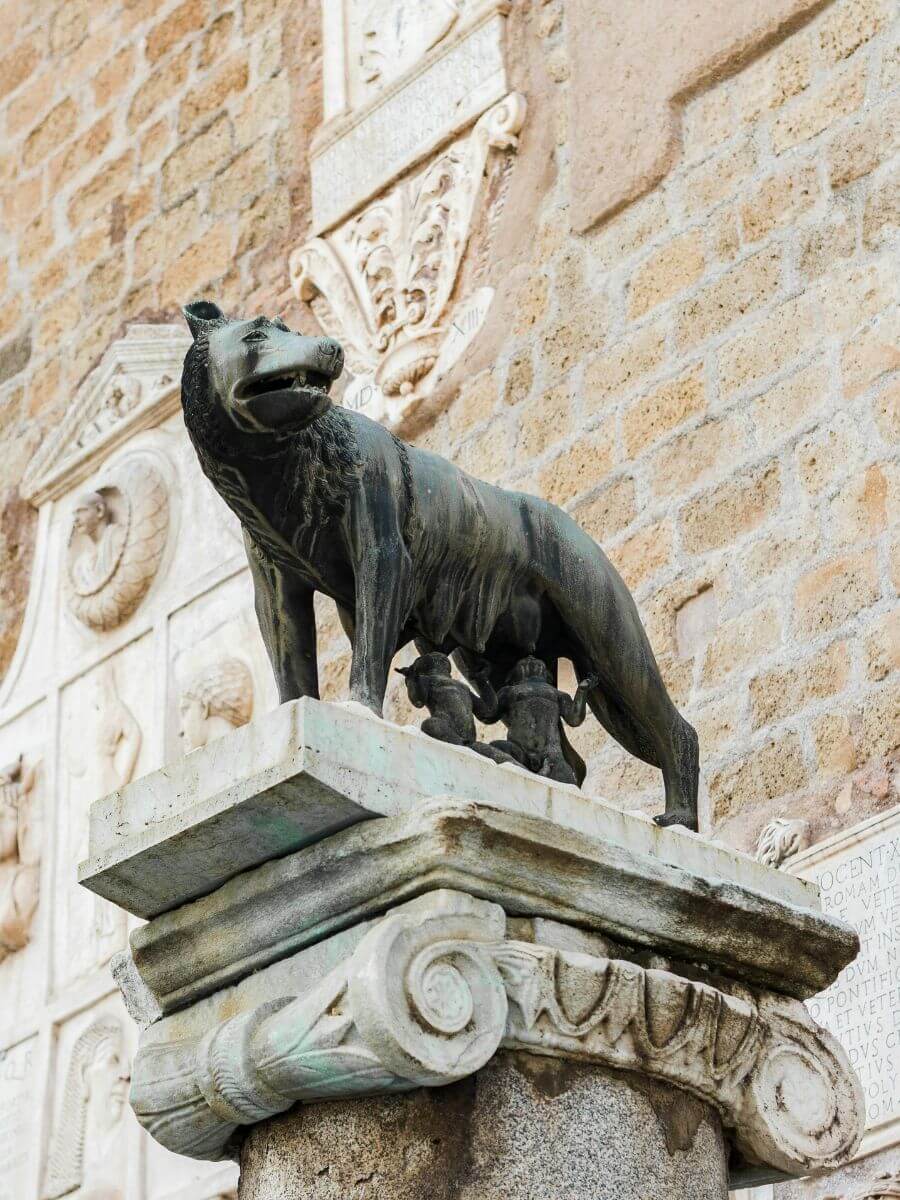
The Capitoline Wolf
This is probably the most famous piece in the museum and one of the most iconic symbols of Rome itself.
The Capitoline Wolf, a legendary bronze sculpture, depicts the she-wolf nursing the twins Romulus and Remus. The wolf dates back to antiquity, while the twins were added later during the Renaissance.
You’ll find it in the Sala della Lupa (Hall of the Wolf) in the Palazzo dei Conservatori, displayed almost like a sacred object.
Standing in front of this sculpture, which has shaped an entire foundation myth of Rome, is a moment that really gives you chills.
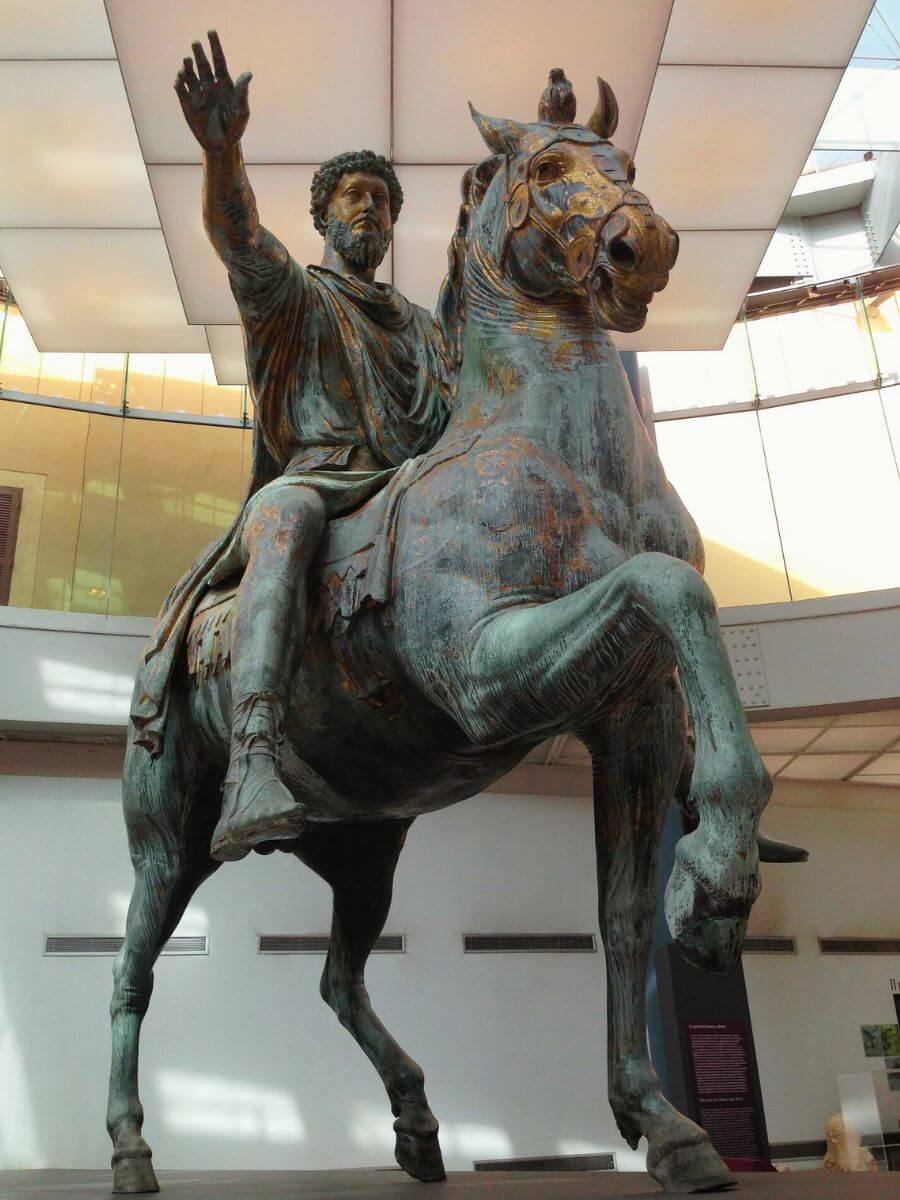
The Original Equestrian Statue of Marcus Aurelius
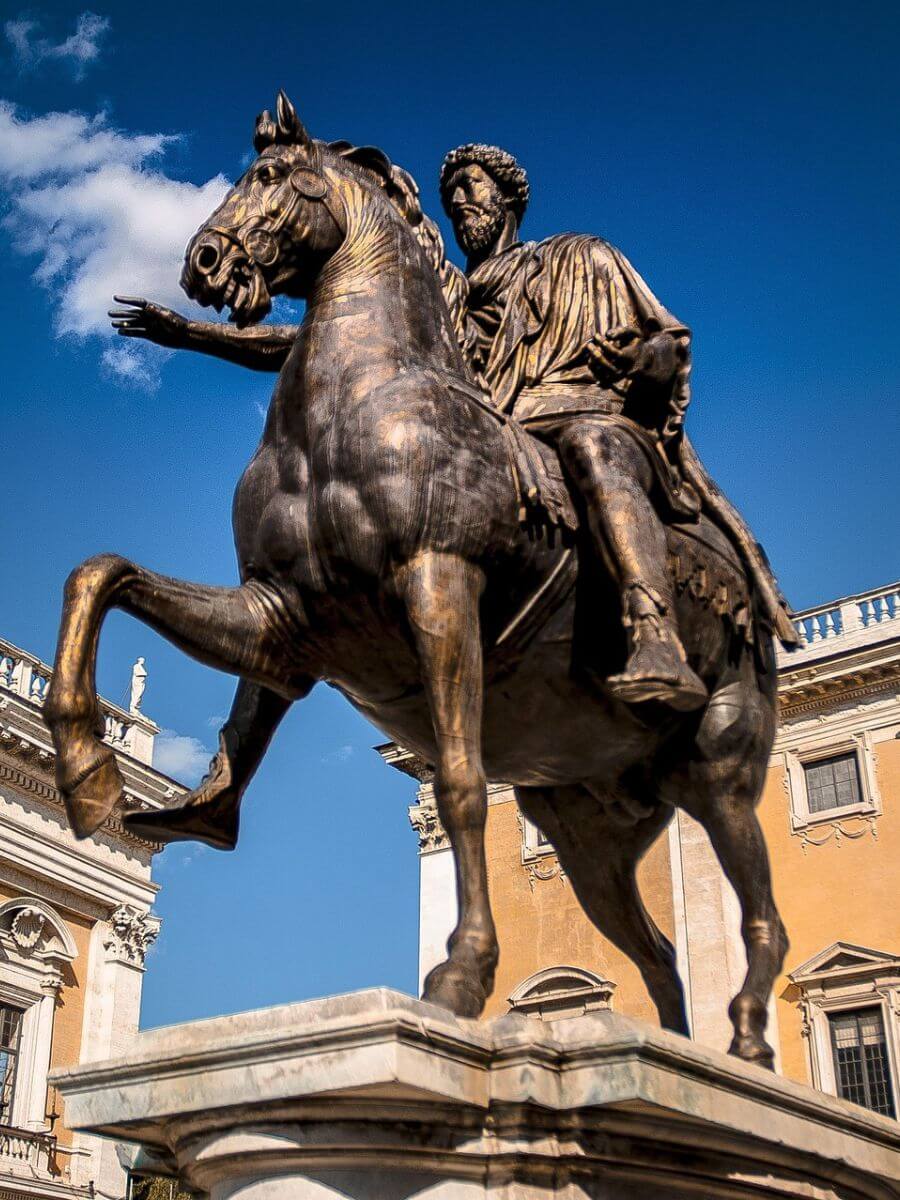
If you crossed the Piazza del Campidoglio before entering, you probably noticed the impressive equestrian statue at the center.
Surprise: it’s just a copy.
The original masterpiece is preserved inside the museum to protect it from the weather and once you see it up close, you’ll understand why.
The statue is enormous, elegant, and astonishingly well preserved. Marcus Aurelius, the philosopher-emperor, appears calm and authoritative, captured in one of the very few surviving bronze equestrian statues from antiquity.
The museum displays it in a bright, glass-walled room that showcases its full majesty. It’s one of the absolute highlights of the Capitoline Museums.
The Colossal Fragments of Constantine
Time for a change of scale.
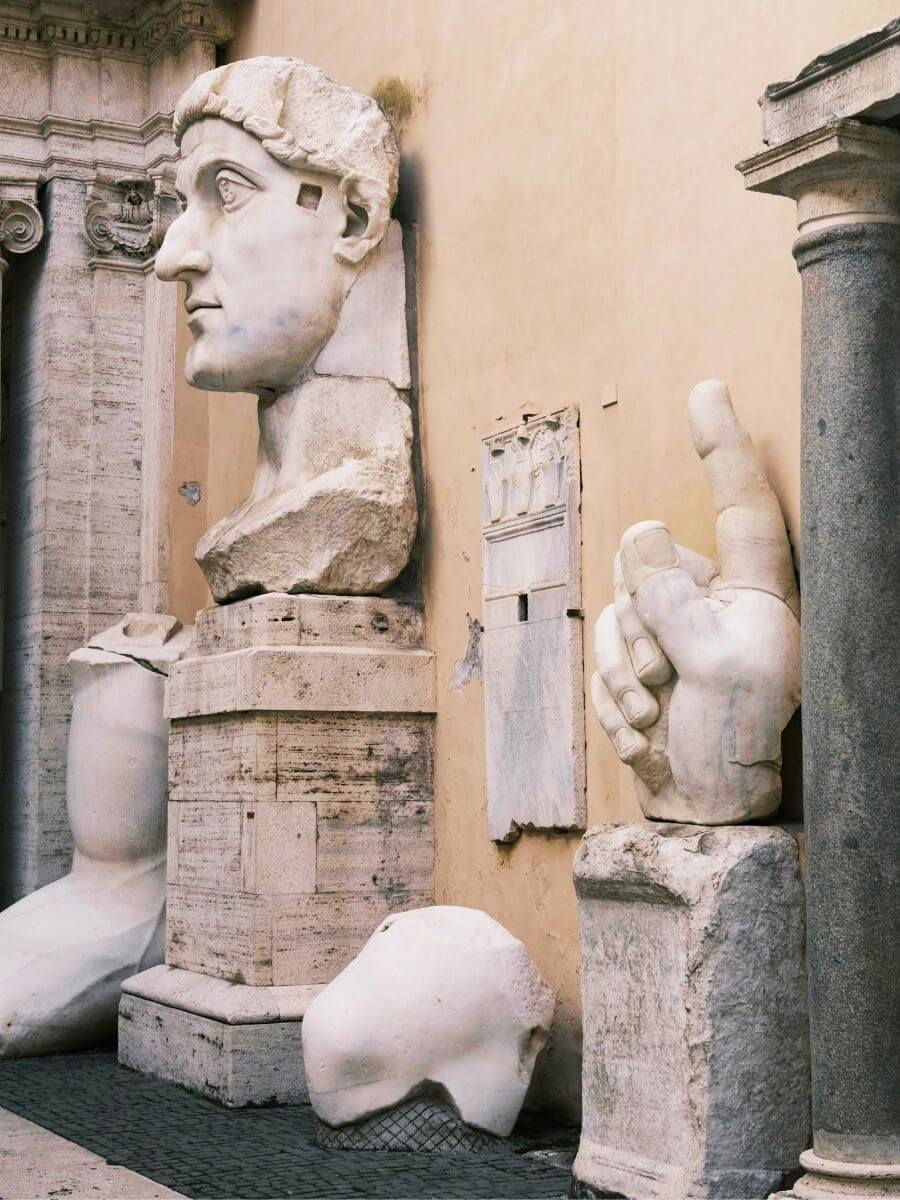
In the courtyard of the Palazzo dei Conservatori, you’ll come across a series of absolutely gigantic marble fragments, the remains of a colossal statue of Emperor Constantine that originally stood about 12 meters (40 ft) tall.
What survives today is impressive enough on its own:
- the head, nearly 2 meters high,
- the right hand,
- the arm,
- a knee,
- and the massive feet.
It’s one of the most striking areas in the Capitoline Museums because you can instantly imagine the monumental impact this statue once had when it towered over the Basilica of Maxentius in ancient Rome.
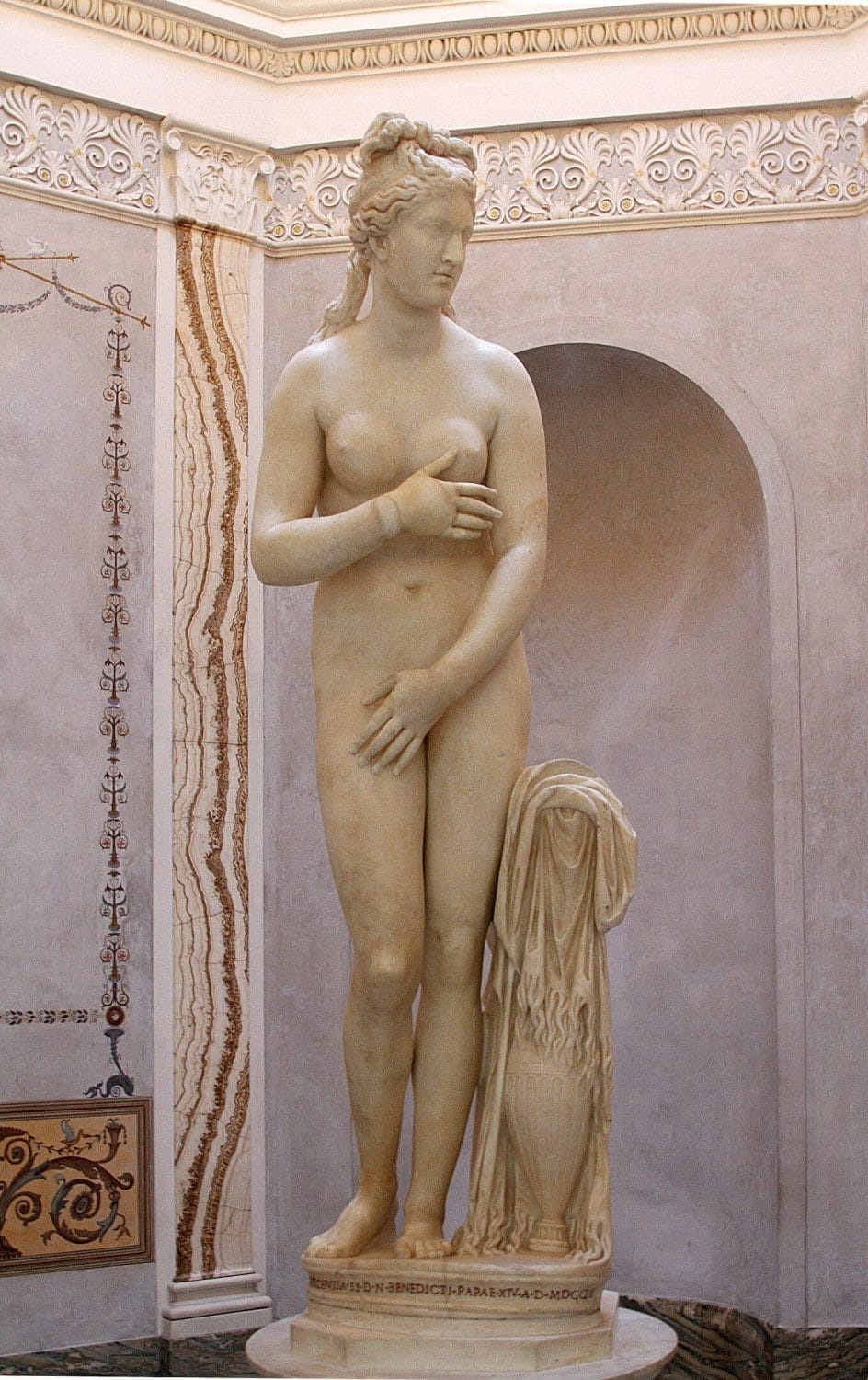
The Capitoline Venus
A completely different atmosphere awaits you next, from imperial power to pure grace.
Displayed in the Palazzo Nuovo, the Capitoline Venus is one of the most elegant and celebrated representations of Aphrodite from the ancient world.
This type of Venus statue was popular throughout antiquity, but the Capitoline version is among the most famous and admired. Depending on the time of day, the natural light in the room softens the marble and gives the statue an almost glowing presence.
If you love Greek art reinterpreted by Roman sculptors, this is one masterpiece you won’t forget.
The Dying Gaul
Get ready for a genuinely emotional moment.
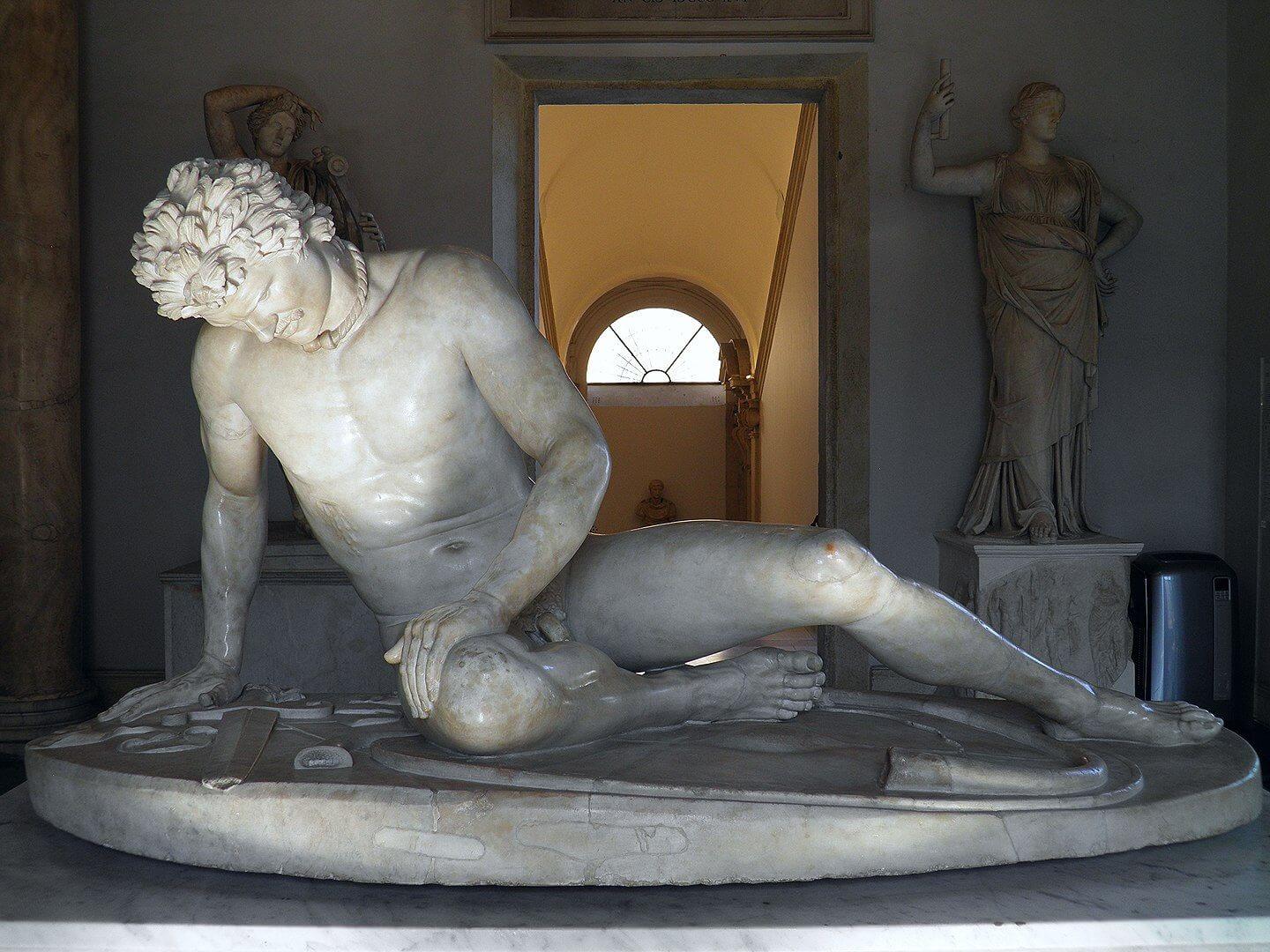
Also housed in the Palazzo Nuovo, the Dying Gaul is one of the most moving sculptures in the entire museum.
It depicts a wounded Gallic warrior in the final moments of his life. The tension in his body, the downward gaze, the torque around his neck, everything is rendered with incredible realism and sensitivity.
It’s impossible not to feel something in front of this sculpture.
This is exactly the kind of masterpiece that reminds you why the Capitoline Museums are considered one of the most important museums in Rome, second only to the Vatican Museums.
The Pinacoteca (Titian, Caravaggio, Rubens & more)
Yes, the Capitoline Museums aren’t just about statues!
Inside the Palazzo dei Conservatori, you’ll find the Pinacoteca, an exceptional collection of paintings ranging from the Middle Ages to the 18th century.
Among the artists on display, you can admire works by:
- Caravaggio,
- Titian,
- Rubens,
- Veronese,
- and several other major European masters.
The Pinacoteca is often much quieter than the sculpture galleries, which makes it a perfect little oasis where you can slow down, breathe, and really take in the artwork.
The Renaissance Rooms Inside the Palazzo dei Conservatori
Prepare for a serious wow moment.
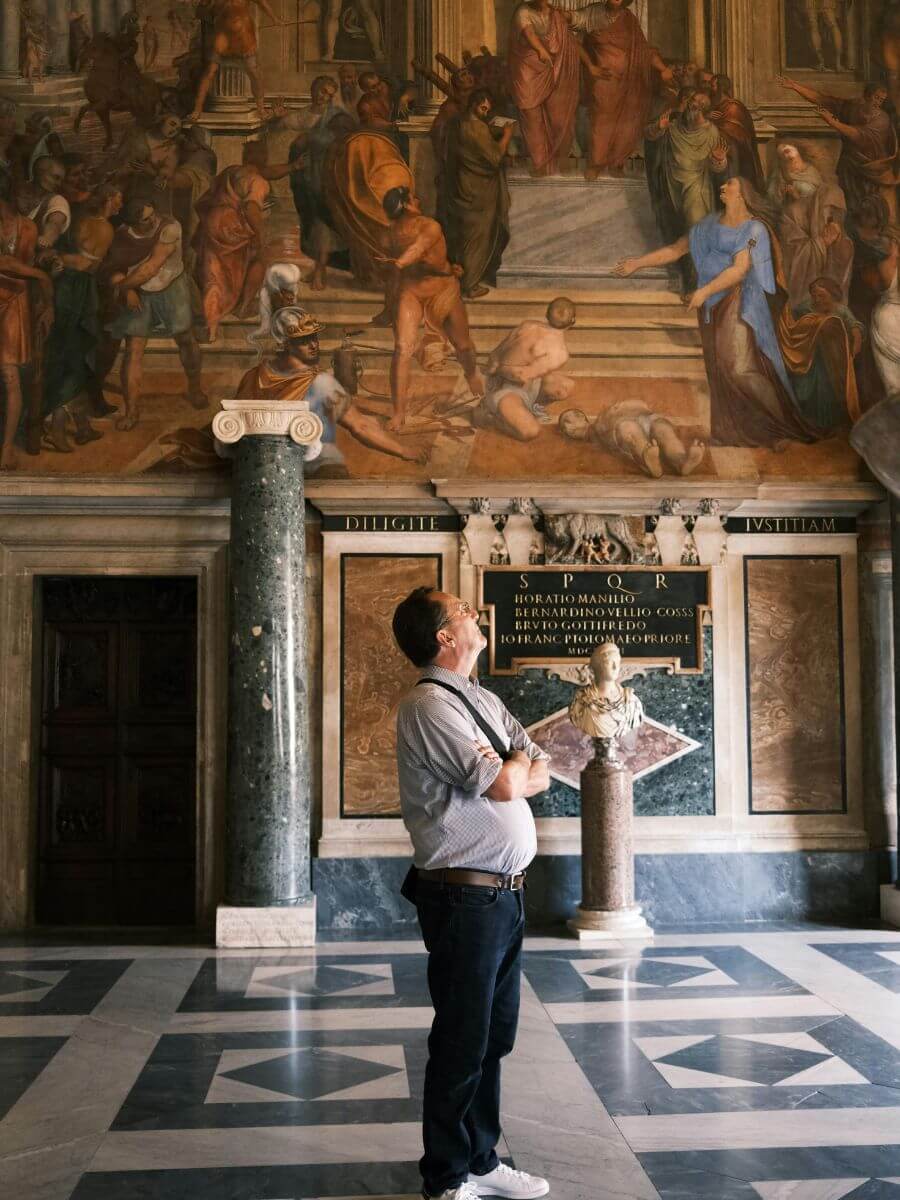
Some rooms in the Palazzo dei Conservatori are still decorated with their original 16th-century frescoes. Painted ceilings, columns, tapestries… everything here evokes the grandeur of Renaissance Rome.
These rooms aren’t just beautiful, they also tell stories of Rome’s mythical heroes and its influential patrician families.
We often rush from one sculpture to the next, but take a few minutes to look up. Trust me, it’s worth it.

The View over the Roman Forum
One of the most stunning views in Rome and yet, many visitors walk right past it.
From the museum’s terraces (or even just along certain windowed corridors), you can look out over:
- the Temple of Saturn,
- the Arch of Titus,
- the towering columns of the Roman Forum,
- and even part of the Palatine Hill.
The best time for this breathtaking panorama? Late afternoon, when the golden light slides over the ruins and makes you feel as if you’ve traveled 2,000 years back in time.
Other famous Capitoline Museums artworks
Here, you can see some amazing and significant works of art, including the famous sculptures. Some of the Capitoline Museum highlights also include:
- The slightly violent Lion attacking a horse. Some bits of the sculpture date back to 300 BC!!
- 17th Century Bust of Medusa, complete with weird snake-like hair.
- The remarkable 1st Century Boy With Thorn, which depicts a young boy removing a thorn from his feet.
- The Hall of Tapestries inside the Conservatori, as well as the frescoes
- The Great Hall in the Palazzo Nuevo
Ticket Options for the Capitoline Museums in Rome
Choosing the right Capitoline Museums ticket can feel a bit confusing at first with several options, different prices, and various add-ons. To make it easier, I’ve gathered the most useful and traveler-friendly tickets below.
Standard Ticket or Skip-the-Line Ticket: Which One Should You Choose?
When booking your Capitoline Museums tickets, you’ll usually be choosing between two main options (you can compare prices here >>):
- Standard ticket (from €20 >>) : You enter at your selected time slot and explore freely at your own pace. It’s the most affordable and flexible choice, perfect if you prefer a self-guided visit.
- Skip-the-line ticket with introduction video (from €30 >>) : This option includes a 30-minute multimedia video that gives you a clear overview of Capitoline Hill, its evolution through the centuries, and the key masterpieces you’re about to see.
Both tickets includes access to the same museum areas: the Palazzo dei Conservatori, the Palazzo Nuovo, temporary exhibitions, and the Galleria Lapidaria.
So the real difference comes down to comfort and immersion: Do you want to walk straight in and enjoy extra context, or simply explore freely at the best price?
Guided Tour: The Most Enriching Way to Visit
If you want to not only admire the artworks but truly understand them, a Capitoline Museums guided tour (this one is highly recommended) is by far the most rewarding option.
With this ticket, you get:
- A 3-hour guided tour in English, led by an expert in art history or archaeology
- A structured itinerary through the Palazzo dei Conservatori, the Palazzo Nuovo, and the Galleria Lapidaria
- Fascinating insights you’d never catch on your own: political symbolism behind statues, how Roman copies of Greek originals were made, the hidden story of the Capitoline Wolf, and the turbulent history of Capitoline Hill
Some tours also include a walk through the Piazza del Campidoglio and down toward Piazza Venezia, helping you understand how the whole area evolved over time
Prices range from €50 (like this option here) to €175 (for private tours or premium experiences >>), depending on the group size and booking platform.
👉 Why choose a Capitoline Museum tour?
Because the Capitoline Museums are remarkable but can be overwhelming without explanations. If this is your first time in Rome, or if you want a deeper understanding of what you’re seeing, a guided tour completely transforms the experience. You walk out feeling like you finally grasp the heart of ancient Rome.
If you still haven’t decided, check out the Capitoline Museum Virtual Tour here.
Combo Tickets: The Best Way to Save Time and Money in Rome
If you’re planning to visit several sites during your stay, combo tickets are one of the smartest ways to save time and often money. Several platforms offer convenient bundles that include the Capitoline Museums plus another major attraction.
Here are the most useful Capitoline Museums combo tickets:
- Capitoline Museums + Doria Pamphilj Gallery (see latest price >>) : A great combo if you want to pair ancient Rome with Baroque art in a single outing. After exploring the masterpieces of the Capitoline Museums, you walk less than 10 minutes to the stunning private Doria Pamphilj Gallery to admire works by Caravaggio, Titian, and Velázquez.
- Capitoline Museums + Colosseum, Roman Forum, Palatine Hill & Mamertine Prison (see latest price >>) : The perfect choice if you want to cover the best of Ancient Rome in one day. Start with the Capitoline Museums, then follow with the Colosseum, the Forum, the Palatine Hill, and the Mamertine Prison.
- Capitoline Museums + Vittoriano Panoramic Elevator (see latest price >>) : With this ticket, you visit the museums and then head to the top of the Vittoriano using its glass panoramic elevator. The views over the Roman Forum, the Colosseum, and the entire city are absolutely spectacular.
- Capitoline Museums + Centrale Montemartini (see latest price >>) : This new “Capitolini Card” launched by the museum includes access to its industrial-archaeology annex. Centrale Montemartini is rarely crowded and offers a unique contrast between ancient sculptures and early 20th-century machinery — a fantastic bonus visit if you have extra time.
Are the Capitoline Museums Included in Roma Pass?
If you’re planning to visit several major attractions, a Rome sightseeing pass can help you optimize your trip and your budget.
Good news: the Capitoline Museums are included in several popular passes, which can save you both money and time.
Here are the most interesting options 👇
- Roma Pass 72h : Includes free entry to two sites, discounts on additional museums, and unlimited public transport in Rome. 👉 Usually the best choice for a 3-day stay with big visits like the Colosseum, Castel Sant’Angelo, and of course the Capitoline Museums. (from €58.50 >>)
- Omnia Card : Includes everything in the Roma Pass plus skip-the-line access to the Vatican Museums, Sistine Chapel, and St. Peter’s Basilica. 👉 Ideal only if you plan a big Vatican + Ancient Rome itinerary. Otherwise, it’s often too expensive. (from €149 >>)
- Go City Explorer Pass Rome : Works by number of attractions (choose 2, 3, 4, 5, or 7), and the Capitoline Museums are included. 👉 Great if you want to mix classic sightseeing with more fun experiences, not just museums. (from €149 >>)


Capitoline Museums Opening Hours (and the Best Time to Visit)
The Capitoline Museums in Rome are open every day from 9:30 a.m. to 7:30 p.m., with final entry at 6:30 p.m.
It’s a very flexible museum schedule, which makes it easy to fit into a 3 days Rome itinerary.
There are a few exceptions you should know:
- 24 & 31 December: open only from 9:30 a.m. to 2:00 p.m.
- 1 May & 25 December: closed
- 1 January: special hours 11:00 a.m. to 8:00 p.m.
Tip : Always double-check the opening hours when booking your ticket. Like many museums in Rome, the Musei Capitolini occasionally adjust their schedule depending on the season, public holidays, or special events.
Days | Opening Hours |
Every day | 9:30am - 7:30pm |
24 & 31 December | 9:30am - 2:00pm |
1 January | 11:00am - 8:00pm |
1 May & 25 December | Closed |
When Is the Best Time to Visit (to Avoid the Crowds)?
Even though the Capitoline Museums are far less crowded than the Vatican Museums, timing still makes a big difference.
- The best moment: right at opening time (9:30 a.m.) : You’ll enjoy a much quieter visit. Tour groups generally start arriving around 10:30–11:00 a.m.
- Weekdays rather than weekends : If you can, skip Saturdays and Sundays, visitor numbers rise quickly, especially from April to October.
- Late afternoon (after 5:00 p.m.) : The atmosphere becomes much calmer, rooms start to empty, and the natural light from the Caffarelli Terrace is gorgeous. Perfect if you want to take photos without crowds in the background.
How Long Do You Need to Visit the Capitoline Museums?
Planning the right amount of time truly changes how much you enjoy the visit.
On average:
- 2.5 hours is enough to see the main rooms without rushing.
- 3 to 4 hours if you want to explore everything: Palazzo dei Conservatori, Palazzo Nuovo, the Pinacoteca, the Galleria Lapidaria, plus the panoramic view from the Caffarelli terrace or gardens.
Itinerary Tip : The Capitoline Museums fit perfectly into a half-day combo: Capitoline Hill + Roman Forum + Victor Emmanuel II Monument.
Everything is within a 5-minute walk, so it’s easy to link the visits!
Where Are the Capitoline Museums in Rome?
The Capitoline Museums (Musei Capitolini) sit right in the heart of Rome’s historic center, at the top of Capitoline Hill, one of the most symbolic places in the entire city.
Up here, you’re literally surrounded by Rome’s greatest ancient landmarks: the Roman Forum, the Via dei Fori Imperiali, Piazza Venezia, and the massive Vittoriano monument.
- 📍 Address: Piazza del Campidoglio, 1, 00186 Rome, Italy
It’s an ideal location if you want to combine your visit with the Forum, the Colosseum, or simply a walk through the historic center.
And the Michelangelo-designed Piazza del Campidoglio alone is worth the trip, it’s one of the most beautiful squares in Rome.
How to Get to the Capitoline Museums
The Musei Capitolini are very easy to reach, no matter how you’re getting around Rome.
- By metro : There’s no station right on Capitoline Hill, but you can get quite close via Line B – Colosseo station. From there, it’s about a 15-minute walk along the Via dei Fori Imperiali, one of the most scenic walks in Rome, with the entire Roman Forum unfolding beside you before you climb up to the Capitoline.
- By bus : This is the most convenient option. Get off at Piazza Venezia, a major hub served by many lines including 30, 40, 60, 70, 75, 81, 87, 118. You’ll only have a 2–3 minute walk to reach the Cordonata staircase. Also, all Rome hop on hop off buses stop at the Piazza Venezia.
- On foot : If you’re already in the center, walking is definitely the best option. Approximate walking times from the Roman Forum → 5 min, from the Pantheon → 12 min, from Piazza Navona → 15 min and from Monti → 10–12 min. 👉 For the most spectacular arrival: climb the Cordonata, the monumental staircase designed by Michelangelo. It’s by far the most beautiful way to enter the Piazza del Campidoglio.
- By car : Better forget it 😅. Rome’s historic center is a ZTL (limited traffic zone) and driving here can quickly lead to fines. If you really must drive, the safest option is to park in a private garage near the Vittoriano but it’s not the most comfortable way to explore Rome.
Practical Tips for Visiting the Capitoline Museums
- Accessibility : The Capitoline Museums are generally accessible thanks to elevators, ramps, and tactile aids for visually impaired visitors. Entrance is free for disabled visitors and one companion (with valid documentation).
- Photos & videos : You’re free to take photos and videos without flash, tripods, or selfie sticks. Some temporary exhibitions may have restrictions, look for signage at the entrance of each room.
- Cloakroom & restricted items : There’s a free cloakroom at the entrance. Large bags, bulky umbrellas, and strollers are not allowed inside the galleries, but you can safely leave them before starting your visit.
- Wear comfortable shoes : the museum complex is large and spread across several levels.
- Bring a bottle of water (cafés around Capitoline Hill are… not the cheapest 😅).
- Pick up the free Capitoline museum map at the entrance to avoid missing major rooms.
- Take a break at Caffarelli Terrace : the Capitoline museum’s rooftop café offering exceptional views of Rome, perfect for catching your breath between two galleries.
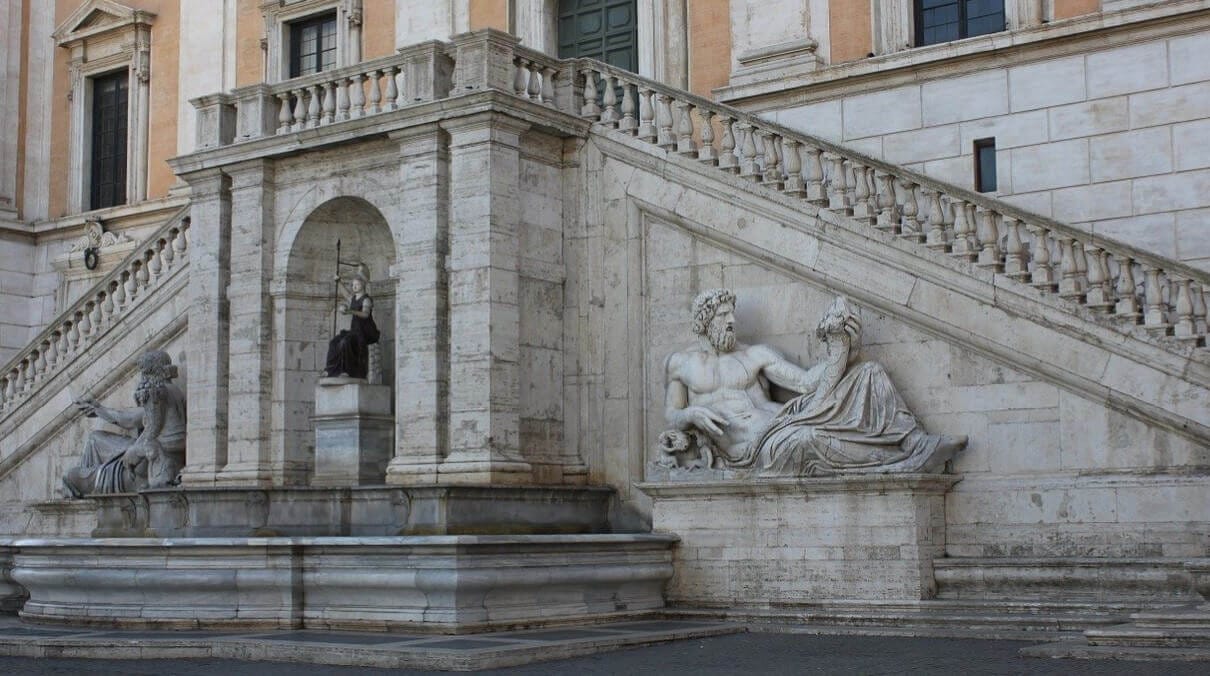
The Capitoline Museums in Rome (or Musei Capitolini if you want to impress the locals) form one of the most fascinating museum complexes in the city. They’re located on the Piazza del Campidoglio, a square entirely redesigned by Michelangelo.
Understanding how the Capitoline Museums are structured is essential: the buildings are numerous, interconnected, and each one has its own identity. Knowing how everything fits together will help you get the most out of your visit.
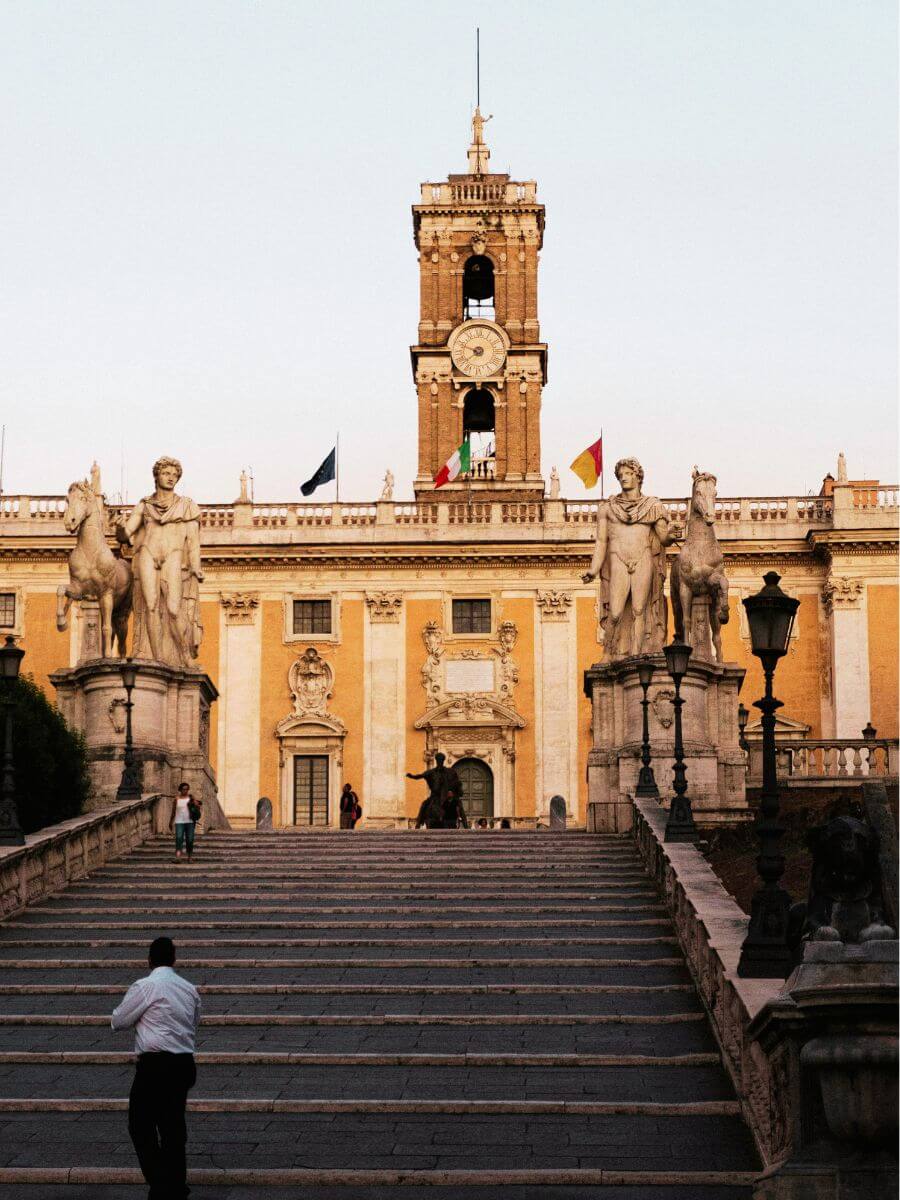
Climbing the famous Cordonata staircase already feels like stepping onto a movie set and that’s before you even enter the museum.
A Unique Museum Complex on Piazza del Campidoglio
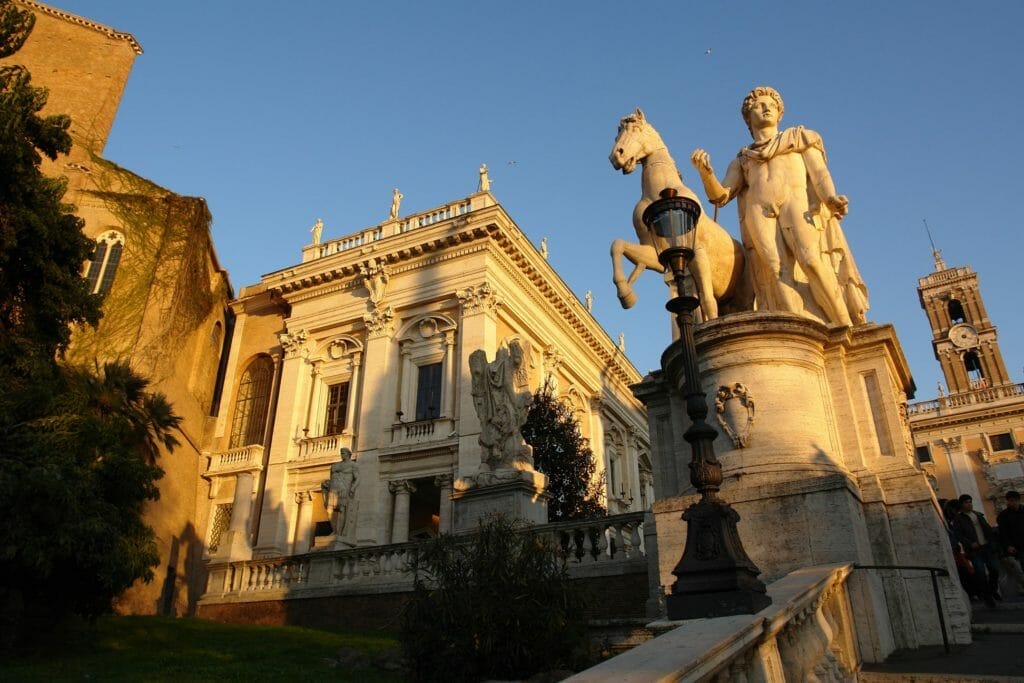
The Capitoline Museum isn’t a single building filled with statues, it’s a collection of palaces, each with its own character and treasures. Everything is perched atop Capitoline Hill, one of the most symbolic places in Rome since ancient times.
On one side, you’re surrounded by history: this hill was the religious and political heart of Ancient Rome, home to the great temples dedicated to Jupiter, Juno, and Minerva.
On the other, you’re walking through a place that shaped the modern concept of museums: the Musei Capitolini are considered the world’s first public museum, officially opened to visitors in 1734.
In short: the story begins before you even step through the door.
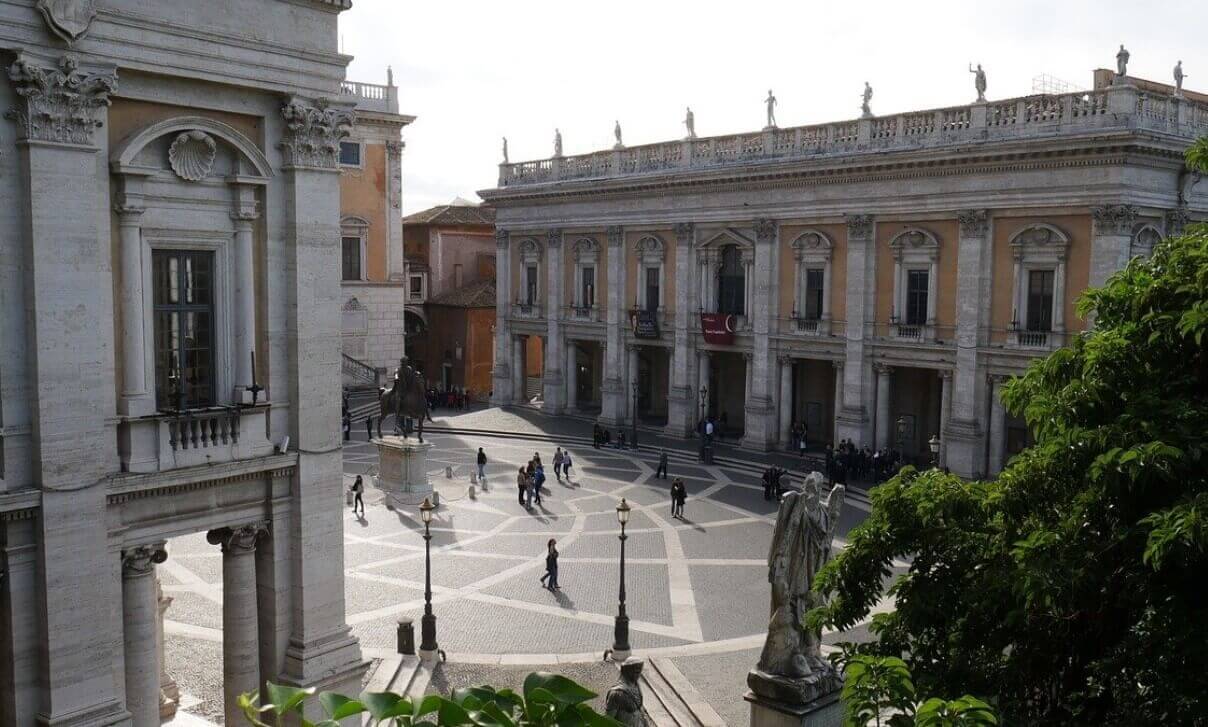
The Buildings That Make Up the Musei Capitolini
The Capitoline Museums are built around three main spaces: two palaces you will visit, and a subterranean gallery that links them so you don’t have to step outside. Very convenient when it’s blazing hot… or raining.
Palazzo dei Conservatori
This is often where your visit begins. Inside, you’ll find:
- Some of the museum’s most iconic sculptures, including the colossal fragments of Constantine
- Magnificent Renaissance rooms decorated with frescoes and rich architectural details
- The Capitoline Pinacoteca, an intimate painting gallery featuring masterpieces by Rubens, Titian, Veronese, and yes, even Caravaggio
The atmosphere here is grand, theatrical, and unmistakably Roman.
Palazzo Nuovo
Built later to house the enormous number of ancient sculptures, the Palazzo Nuovo is a paradise for lovers of Greco-Roman art.
Here you’ll discover:
- The Capitoline Venus
- The Hall of the Philosophers, with statues of Homer, Socrates, Plato, and more
- The Dying Gaul, one of the most emotional sculptures of antiquity
Its layout is more symmetrical and traditionally “museum-like,” but the beauty of the works speaks for itself.
Galleria Lapidaria
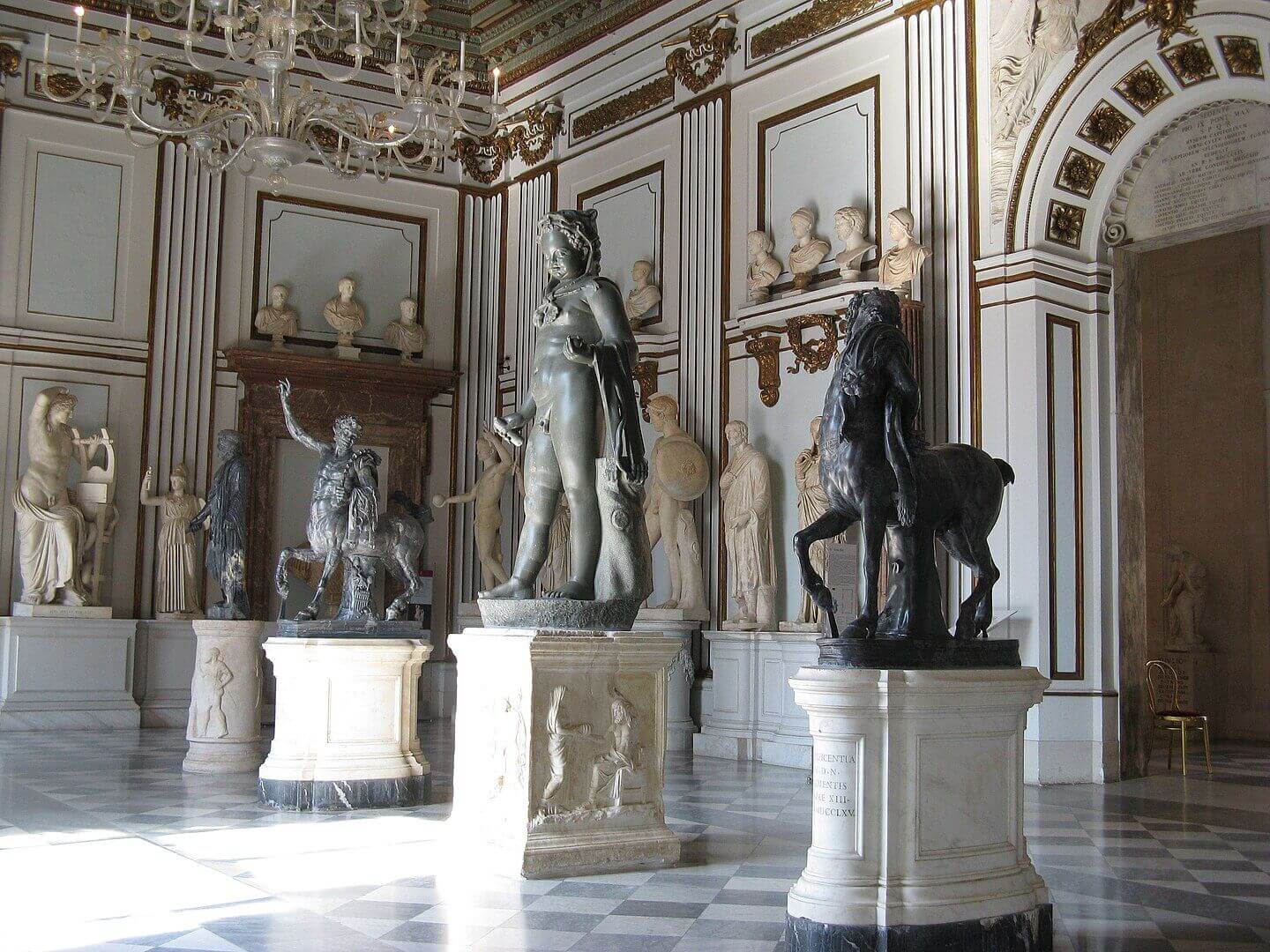
This is the underground passage that connects the two palaces, an archaeological corridor lined with ancient inscriptions.
You walk beneath the Piazza del Campidoglio, a moment that feels almost magical, as if you’re literally crossing through layers of Roman history.
Palazzo Senatorio
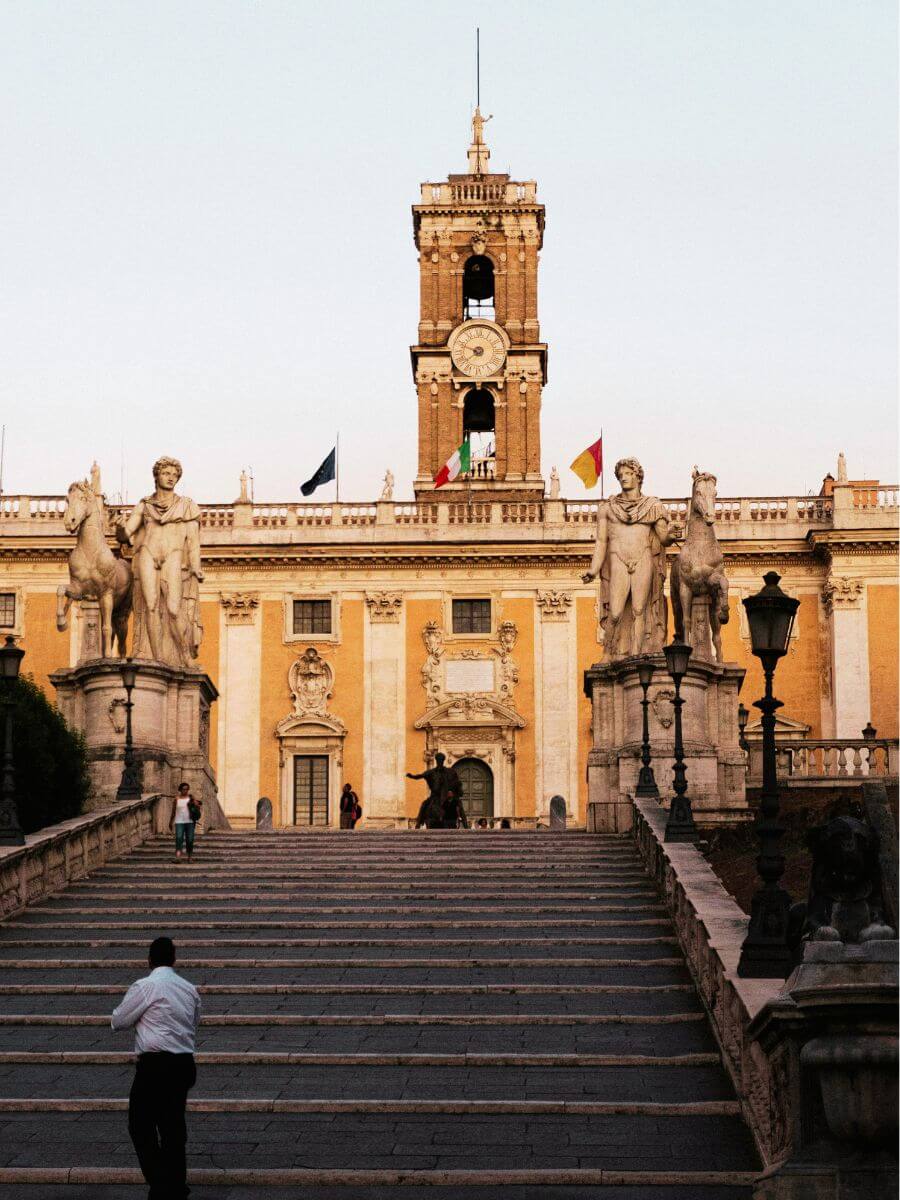
You’ve almost certainly seen this building in photos: it’s the palace that dominates the square with its monumental staircase. The Palazzo Senatorio isn’t part of the museum, it’s Rome’s city hall.
You can’t visit the inside, but it plays a major role in the harmony and grandeur of the Piazza del Campidoglio. And let’s be honest: taking a photo of its façade is practically a rite of passage when visiting the Capitoline Museums.
History of the Capitoline Museums
You’ve probably heard of the Vatican Museums… but the Capitoline Museums are actually even older. Here’s how this extraordinary place became one of the most important museums in the world.
1471: The Papal Gift That Created the Capitoline Museums
The story begins in 1471, when Pope Sixtus IV donated four ancient bronzes to the people of Rome, including the famous Capitoline Wolf and the Spinario (Boy with a Thorn).
At the time, this was revolutionary: artworks traditionally belonged to the Church or noble families. For the first time, a pope declared that ancient art should belong to the people, not just the elite.
This first donation marked the birth of what would become the Musei Capitolini.
Over the centuries, other popes continued to enrich the collection:
- Paul III moved several sculptures to the Capitoline Square during Michelangelo’s redesign.
- Pius V transferred numerous pagan statues from the Vatican to the Capitoline.
- Clement XII accelerated acquisitions of sculptures and paintings in the 18th century.
As a result, the collections grew rapidly and soon became one of the largest in Europe.
1734: The First Public Museum in the World
In 1734, Pope Clement XII officially opened the Capitoline collections to the public.
This was a historic milestone: the Capitoline Museums became the first public museum in the world and a place where anyone could admire masterpieces of antiquity, not just aristocrats and clergy.
During this period, the collections were organized between:
- the Palazzo dei Conservatori,
- the Palazzo Nuovo, built specifically to house new artworks,
- and later, the Pinacoteca, enriched with works by Titian, Caravaggio, Rubens, and others.
Archaeological excavations of the 19th century, at the Roman Forum, Palatine Hill, Aventine, and beyond, added even more treasures: statues, inscriptions, architectural fragments…
Modern Transformations and the “Grande Campidoglio” Project
In the 20th century, the museums entered a new phase.
In the 1930s, the collections were reorganized according to stricter archaeological criteria. Exhibition spaces became more educational, better documented, and more logically arranged.
This period also saw major improvements in the presentation of key masterpieces:
- the equestrian statue of Marcus Aurelius,
- the colossal fragments of Constantine,
- and the impressive series of ancient busts in the Palazzo Nuovo.
At the end of the century, Rome launched a vast modernization project known as the “Grande Campidoglio”, aimed at:
- improving visitor flow,
- creating new exhibition spaces,
- enhancing restoration and conservation,
- and making the site more accessible.
One major addition was the Galleria Lapidaria, the underground passageway that now connects the two main palaces without requiring visitors to step outside.
The Integration of Centrale Montemartini
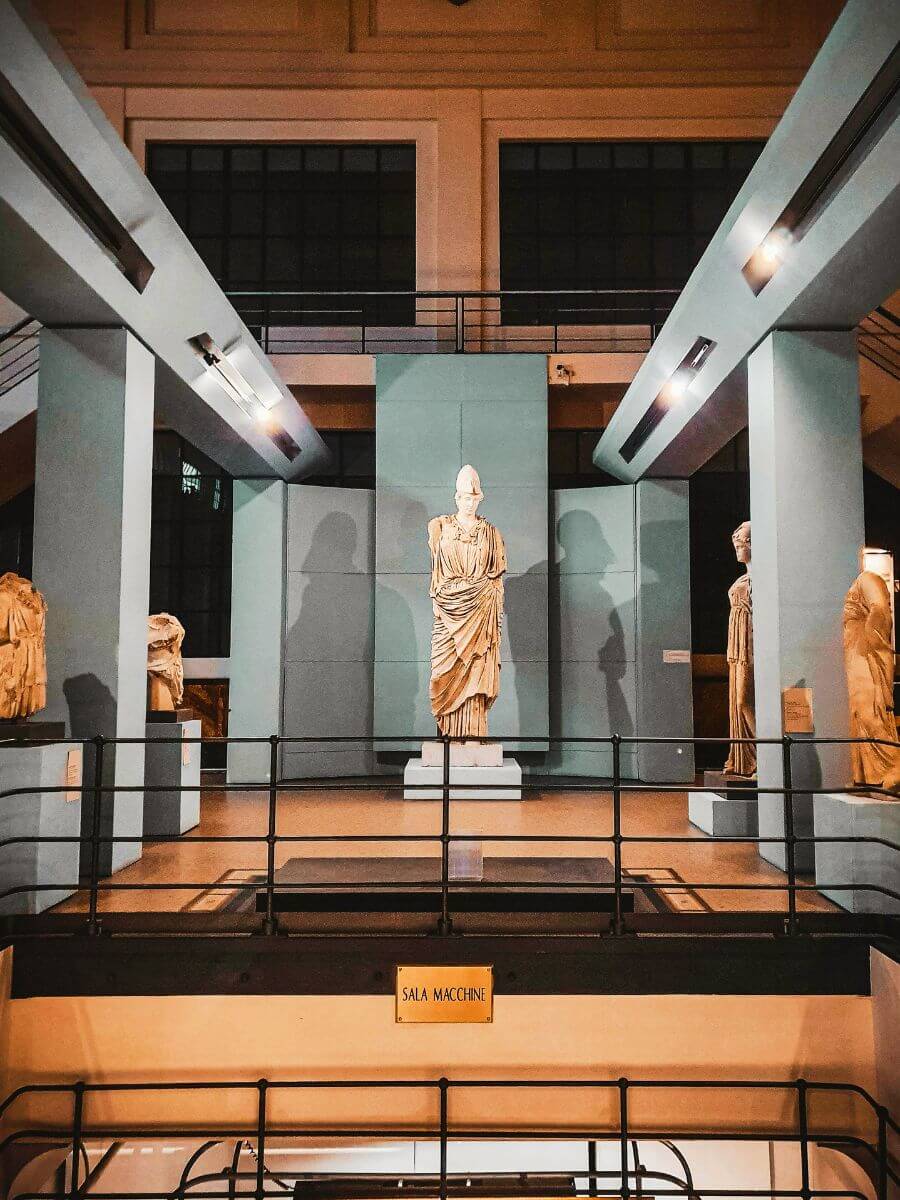
In 1997, an unexpected, and spectacular, location officially joined the Capitoline Museum network: Centrale Montemartini, a former power plant transformed into a museum.
It’s one of the most surprising combinations in Rome: ancient statues displayed among turbines, boilers, and industrial machinery.
Today, it houses a significant portion of the Capitoline archaeological collections and has become a must-see site for visitors who love unusual museum experiences.
What to See and Do Near the Capitoline Museums
One of the biggest advantages of visiting the Capitoline Museums is their unbeatable location: you’re standing right in the heart of Ancient Rome. Step outside the museum and you’re surrounded by some of the city’s most spectacular archaeological sites, all within a 5–10 minute walk.
Here are 10 must-see places right next to the Musei Capitolini:
- Roman Forum : Located just below Capitoline Hill, this is where everything happened in ancient Rome: temples, political tribunes, basilicas, triumphal arches. A walk through the Forum feels like stepping 2,000 years back in time into the very center of Roman life.
- Colosseum : Less than a 10-minute walk away, you’ll find the undisputed icon of Rome. Built in 80 AD, it once held more than 50,000 spectators during gladiator games and public spectacles.
- Palatine Hill : Right behind the Forum, this hill was home to the imperial palaces. It’s also one of the best viewpoints over the Colosseum, the Circus Maximus, and the archaeological parks below.
- Piazza Venezia & the Vittoriano (Altar of the Fatherland) : Just two minutes from the museums, this monumental square is impossible to miss. Climb to Vittoriano's panoramic terrace via the glass elevator, the views over the Forum, Colosseum, and views of Rome are breathtaking, especially at sunset.
- Pantheon : A 10–12 minute walk toward the historic center takes you to one of the best-preserved monuments of the ancient world. Whether you stop for a short visit or a deeper exploration, it’s a perfect follow-up to the Capitoline Museums.
- Trajan’s Forum & Trajan’s Column : At the start of the Via dei Fori Imperiali, admire the 30-meter column carved with detailed reliefs illustrating Emperor Trajan’s military campaigns, a masterpiece of Roman propaganda.
- Santa Maria in Aracoeli : Right next to the museums (with its famous staircase), this medieval church contains beautiful frescoes and a fantastic view from its front terrace.
- Theatre of Marcellus : Just a 5-minute walk from Capitoline Hill, this “mini Colosseum” was built under Augustus. Long forgotten and rediscovered centuries later, it’s now one of Rome’s most striking ancient ruins, complete with Renaissance houses built directly into its upper arches.
👉 In short: visiting the Capitoline Museums places you in one of the best areas to explore Ancient Rome. With sweeping views, monumental architecture, and archaeological treasures at every corner, you can easily spend half a day here… or even an entire day.
FAQ About the Capitoline Museums in Rome

What’s the difference between Capitoline Hill and the Capitoline Museums?
Capitoline Hill refers to the historic hill (Campidoglio), home to Rome’s city hall and the famous square designed by Michelangelo.
The Capitoline Museums, on the other hand, are the museum complex located in the buildings around the square: the Palazzo dei Conservatori, Palazzo Nuovo, and the Pinacoteca. You can walk around the hill and the piazza for free, but museum entry is ticketed.
Are the Capitoline Museums free on certain days?
Yes, they are free on the first Sunday of every month, like many of Rome’s municipal museums. Be aware that it gets very crowded on free days, so arriving early is essential. Certain categories (such as disabled visitors, journalists, or art students) have free admission year-round.
Can you visit only one of the two palaces?
No. Your ticket automatically includes the entire museum complex: the Palazzo dei Conservatori, Palazzo Nuovo, the Pinacoteca, and the underground passage connecting them.
There is no single-building ticket. You’re free to explore at your own pace and spend more time in the rooms you enjoy most.
Do you need to book Capitoline Museums tickets in advance?
Booking isn’t mandatory, but it’s highly recommended, especially during high season, weekends, and school holidays. Booking online guarantees an entry time and helps you avoid the afternoon lines, which can get long. For most travelers, booking ahead is the easiest option.
Is Centrale Montemartini worth visiting?
Absolutely, especially if you enjoy archaeology. This former power plant turned museum displays ancient statues among turbines and industrial machinery, creating a truly unique atmosphere.
It’s less crowded than the main Capitoline Museums and a great way to extend your visit. It’s also included in certain combo tickets.
Is there an audio guide in English?
Yes, the Capitoline Museums offer an English audio guide. You can rent it on site or reserve it when booking your ticket.
It’s very helpful for understanding masterpieces like the equestrian statue of Marcus Aurelius, the Capitoline Wolf, and the colossal fragments of Constantine.
Are the Capitoline Museums suitable for children?
Yes, depending on their age and interests. The museum is large and very sculpture-focused, so it’s generally best suited for curious children aged 7–8 and up.
The giant statues, mythological figures, and views over the Roman Forum tend to captivate younger visitors. Plan a few breaks, especially at the Caffarelli Terrace, to keep the visit enjoyable.

Fanny is a music and travel lover who has been visiting Rome since 2012. She is the founder and main editor of the Roma Pass blog and she like to share the best things to do in Rome.